Photo by Deema Tabaza. Image courtesy of Abdullah Tabaza.
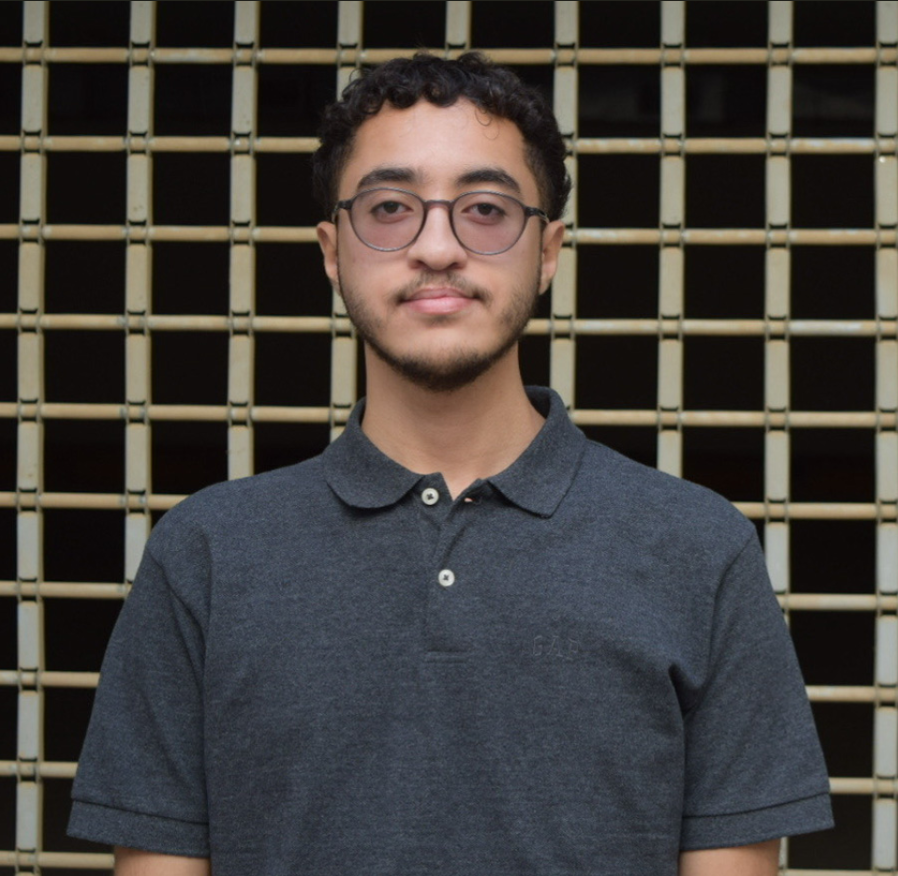
This artist was a resident of cohort 2, 2025-26.
Abdullah Tabaza is a Palestinian architect and artist based in Amman, where he studied architectural engineering at the University of Petra. His practice spans drawing, photography, installation, and design, engaging with themes of ecology, displacement, and memory. In 2023, he participated in the residency Palestine: The Day Called Tomorrow at Darat al Funun, where he delivered a public lecture. In May 2025, he lectured at the American University in Cairo. Most recently, he has taken part in the Darat al Funun Summer Academy in Amman. There he developed an installation that would be exhibited in the group Open Studio at The Lab. Across these contexts, Tabaza bridges research and practice, producing projects that investigate the fragile relations between people and the natural world.
During the Sharjah Art Foundation Residency Programme, I developed a body of research and material experiments that examine landscape as an unstable archive marked by extraction, infrastructure, weather, memory and political interruption. Working from Kalba and its surrounding coastal and industrial conditions, I extended on my ongoing intersectional practice, in which architecture, ecology, geology and displacement operate as methods for reading land.
I developed a central installation in which rocks were placed according to a 1:1 orthogonal projection of my body, transforming it into a carrier of geological weight, territorial memory and accumulated pressure. The work approached the body as one of its recording surfaces, tethered to the landscape and marked, burdened, supported and reconfigured by the materials it encounters. Through this gesture, geology became intimate and physical, while the body became a temporary site of archive and endurance.
In parallel, I produced a series of drawings, maps, sections and constructed terrains. Observing the surrounding environment, I developed an imagined geography on a long paper scroll, combining architectural notation with speculative topographies. This geography was then transferred to sand, where water circulated through pipes and a pump, gradually eroding the constructed landscape. The installation treated infrastructure as a fragile choreography of dependence rather than a stable support system; infrastructure is something that moves, leaks, fails and exposes the vulnerability of the lives built around it.
My time in Kalba was spent against a wider backdrop of environmental and regional instability, including exceptional flooding and the interruption of daily life by war. Rather than documenting these events directly, the works registered their atmospheric pressure through matter: rock, sand, water, circulation, collapse and repair. Additional acrylic and rock studies explored how archived stones could shape, and deform, transparent surfaces, proposing another way for geology to leave an index.
Together, the pieces produced during the residency form a research environment around bodies, future ruins, damaged grounds, artificial landscapes, hydrological systems and the fragile agreements through which humans attempt to hold land in place.
Photo by Deema Tabaza. Image courtesy of Abdullah Tabaza.
 OFF
OFF