Image courtesy of Azzah Salwaa.
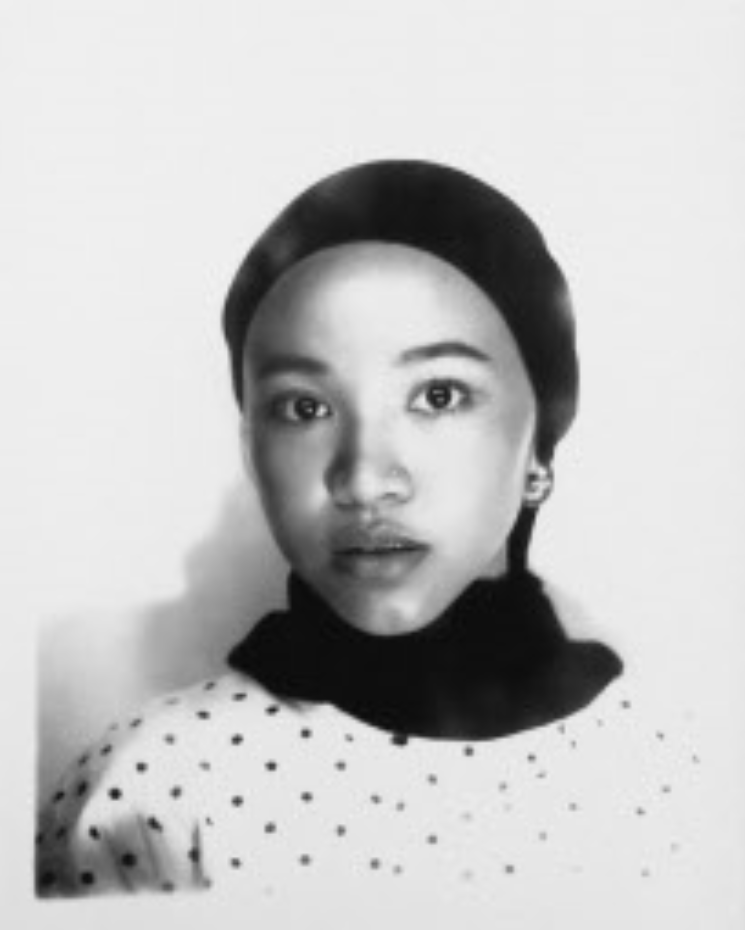
This artist was a resident of cohort 2, 2025-26.
Azzah Salwaa explores the potential of storytelling through memory and archive, blending personal narratives alongside traditional and cultural practices. Her work invites critical reflection on identity and the multifaceted experience of womanhood. She seamlessly integrates her background in graphic design into her artistic practice, which spans illustration, photography, video, performance and textile. Her works have been featured in exhibitions including Notes on Becoming, Fabbrica del Vapore, Milan (2025); Senang Bersamamu (Happy Together), Selasar Sunaryo, Bandung (2025); Objects of Care, Backhaus Project, Berlin (2023); the Kuala Lumpur Art Book Fair, 2023; and Rasasastra UNION, Semesta Gallery, Jakarta (2022).
The project I developed during the residency is an exploration of memory, domestic space and embodied forms of archiving, shaped through personal narrative, archival material and research into women’s labour. Central to the work is a curtain installation that functions as both surface and threshold, holding fragmented memories while allowing them to remain open, unstable and in process. The project began with the passing of my grandmother and conversations with my father, through which fragments of her life resurfaced. He recalled her as a young woman shaped by early responsibility, movement and song, particularly her dancing to ‘Genjer-genjer’, a folk song once embedded in everyday communal life in Indonesia. These recollections became a way to think about how women’s lives are transmitted through gestures, repetition and oral memory rather than formal historical records.
A recurring family story about my grandmother’s childhood home being marked with an ‘X’ became an anchoring trace within the work. Although its meaning remains uncertain, the mark continues to structure how her life is remembered, transforming the domestic space into an informal archive shaped by care, restraint and emotional residue. Within this framework, the house is not only a physical structure but also a container of memory, where knowledge is held through spatial habits and embodied routines.
Alongside the installation, I worked with archival family photographs, approaching them not as fixed documents but as unstable images that open up gaps between memory, absence and speculation. These photographs became material through which personal history could be reread and reassembled. This research was further extended through readings and archival study in Sharjah and the UAE that focused on women’s labour, gestures of care, maintenance and domestic histories. These materials situated the intimate narratives of my family within broader structures of invisible labour and cultural memory. Together, these elements informed the development of the work as a spatial and material inquiry into how women’s presence persists through everyday acts of care and embodied knowledge.
Image courtesy of Azzah Salwaa.
 OFF
OFF