Photo by Leo Ng. Image courtesy of CUE Art Foundation.
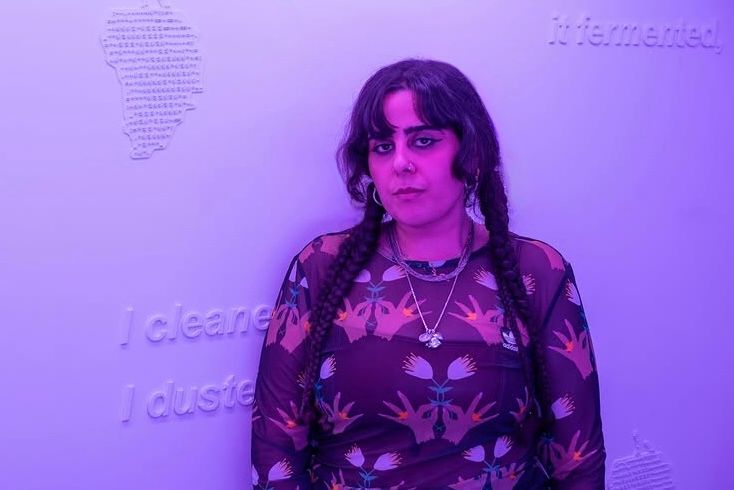
This artist was a resident of cohort 1, 2025-26.
Fatemeh Kazemi is an interdisciplinary artist and researcher whose work takes the form of installation, film, writing and collective organising. Engaging with topics including communal grief, ritual and subculture, Kazemi’s work has been shown internationally, including at Smack Mellon (New York), Ruschman Gallery (Chicago) and Bayt Al Mamzar (Dubai), and screened at major film festivals in London and Dresden.
I arrived at my residency with a proposal centred on bread, hospitality and ritual making. I left with notebooks, recordings, fragments of conversations, bird calls, VHS footage and an unfinished question.
The project emerged through walking. What initially appeared as movement through a city gradually became a method for encountering overlapping worlds: migrant neighbourhoods, marketplaces, archaeological sites, coastlines, deserts and forms of knowledge carried through everyday gestures. Through these visits, history no longer appeared as a sequence of completed events but as something sedimented within the ground, recurring through repetition, erosion and return.
The project became increasingly attentive to forms of knowledge embedded within agricultural and rural practices. In the landscapes I moved through, environmental change, resource extraction, political instability and histories of displacement were not abstract conditions but lived realities. Farmers, villagers and caretakers often appeared as active interpreters of these transformations, continuously adapting their practices to altered ecological and political circumstances. Their observations, stories and everyday negotiations with land and water became an important part of the research.
When the residency ended, my return to Iran coincided with war, internet blackouts and prolonged uncertainty. Unable to distinguish where one landscape ended and another began, I found myself continuing the research while living in a rural village in Isfahan province. The conditions had changed, but the questions remained. Walking became a way of tracing relationships between neighbouring bodies, territories and forms of life that remain materially connected through water, air, labour and memory, even as political structures produce separation and distance.
This research has developed into an ongoing moving-image work, Forging Love in Time of War and Terror. The film follows the afterlife of images circulating through conditions of violence, disappearance and restricted visibility. Rather than documenting events directly, it asks how catastrophe is encountered through repetition, rumour, anticipation and return. How does one remember what was never fully witnessed? What remains after erasure? What forms of intimacy become possible when visibility itself has been damaged?
Photo by Leo Ng. Image courtesy of CUE Art Foundation.
 OFF
OFF