Image courtesy of Monya Riachi.
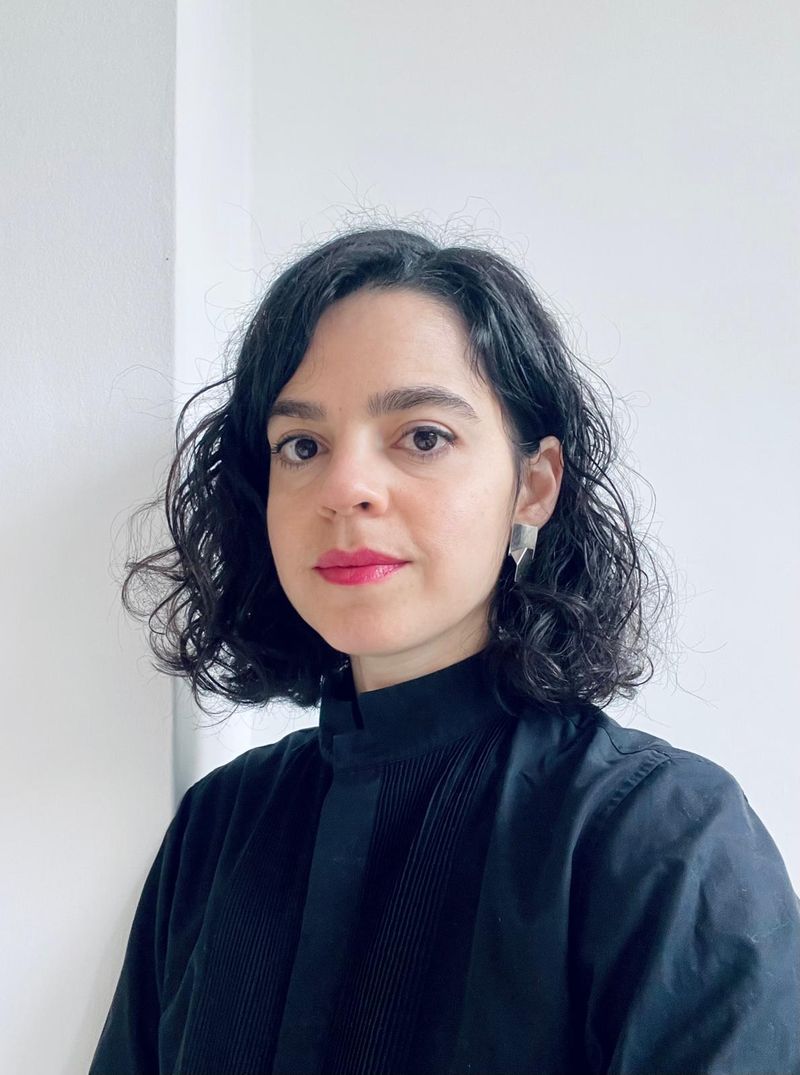
This artist was a resident of cohort 2, 2025-26.
Monya Riachi is an artist based between the United Kingdom and Lebanon. With a background in architecture, she holds an MFA with distinction from Glasgow School of Art. She is the recipient of the 2024 Lewisham Arthouse Postgraduate Award (UK) and the 2024 Boghossian Foundation Visual Arts Prize (Belgium/Lebanon). Her work has been exhibited internationally including Beirut, Glasgow and London. Her solo show ‘Safe Waters’—a reflection on the entanglement of Victorian history with contemporary political and ecological changes across the Mediterranean—opened in February 2025 in the old Deptford Central Library heritage building in London. Previous residencies include Material Futures at Cove Park, Scotland; Ashkal Alwan, Beirut; and Neither at Land nor at Sea with UNIDEE, Cittadellarte, Biela, Italy.
During my residency, I developed research for a new body of work that moves across myth, landscape and material, forging a new direction for my longstanding sculptural and narrative work around salt. Departing from the Sumerian words for ‘salt’ and ‘woman’, mun and munus, the work reflects on both agents’ potential for futurity, invoking the figure of Lot’s wife*— not as a totem of an ending, but as a figure with transformative potential. The local UAE plant kaff maryam or‘True Rose of Jericho’, further shaped the unfolding research by triangulating salt and Lot’s Wife with resurrection. Enriching my research was contemporary contextual discourse around ‘arid abundance’ (Faysal Tabbarah) and Rashid and Ahmed Bin Shabib’s The Anatomy of Sabkhas (Mondadori Electa, 2021) as well as field visits to the ecological landscapes of the UAE, including the Abu Dhabi sabkhas (salt flats), Al Buhais Geological Park and Khor Kalba Mangrove Centre in Sharjah. I began synthesising the field, historic and literary research into a sculptural and material language, developing prototypes with salt casting and crystallisation and testing forms for large scale sculptures through ceramics and illustrations.
In parallel, I worked on a large-scale piece that allowed me to enact the interaction of salt and water on a horizontal surface and then witness the resurrection of salt in real time, from its dissolution in water to its recrystallisation over time. The work featured prose excerpts written in dialogue with Etel Adnan’s The Arab Apocalypse, serving as a witness to the geopolitical and environmental events unfolding around me at the time. My work A cloud above Beirut, above Sharjah is an iteration of my ongoing body of work Concerning Geographies, Entangled Histories, in which I explore mapping through salt and water in harmony in order to connect rather than divide geographies.
*Lot’s wife: Biblical and Quranic figure. In the Old Testament, she was turned into a pillar of salt for looking back while her village was being destroyed. A natural rock and salt formation along the Dead Sea banks in Jordan is often linked to her story.
Image courtesy of Monya Riachi.
 OFF
OFF