 Shafeek Nalakath
Artwork Details:
- Artist(s)
- Nam June Paik
- Title
- TV Buddha
- Date
- 2002
- Medium(s)
- Bronze Buddha, paint, television monitor, closed-circuit video camera, tripod, transformer, adaptors, television/video cable and extension cords, in 11 parts
- Dimensions/Duration
- Dimension variable
- Photo Credit
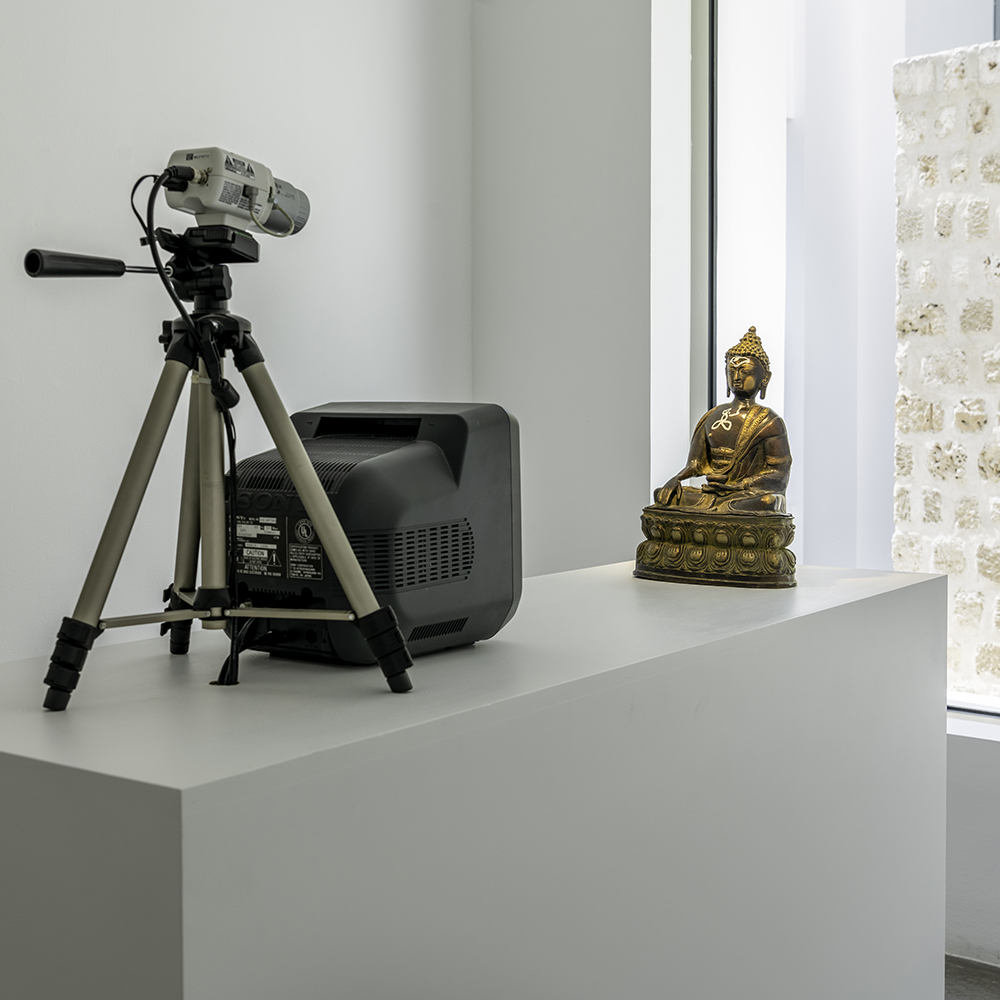
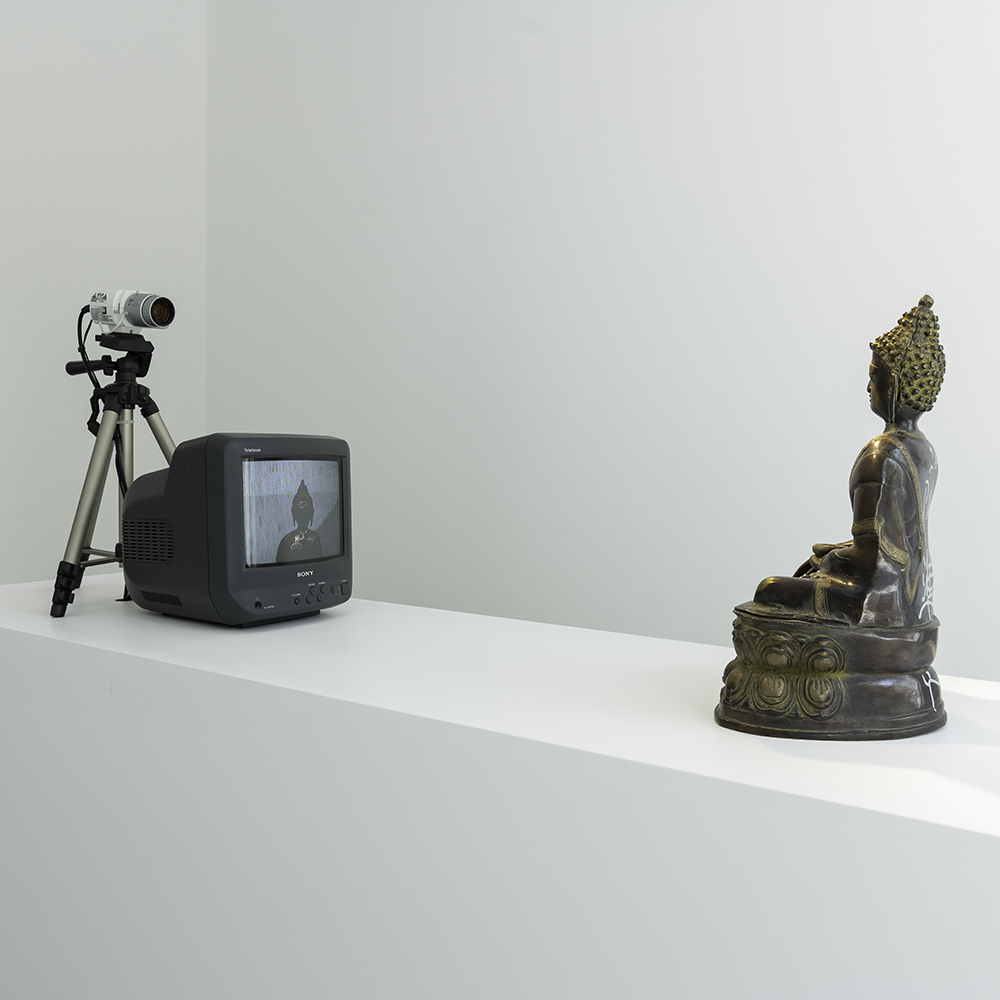
TV Buddha
Nam June Paik is often referred to as the godfather of video art. He was also one of the most influential global thinkers on art and technology. In his artworks and writing, he professed that ‘the future is now’ and in 1974 coined the term, ‘electronic superhighway’—setting the pace for the ‘information superhighway’ that we would later refer to as the mass medium that is the internet. TV Buddha (2002), first conceived and presented in 1974, is perhaps the artist’s best-known work and has since been displayed in multiple configurations. A sculpture of a Buddha, in a tranquil and meditative trance sits before a video camera that records the figurine, simultaneously playing back the footage on a television screen. TV Buddha creates an infinite loop—one of being trapped within the frame of one’s own media apparatus. It can also be interpreted as a modern-day metaphor for the metaverse—a complete and all-encompassing total universe. Observing the Buddha absorbed in their own image is also a reference to society’s self-absorption by and with its media—an allusion to a selfie culture that was to still to come.
