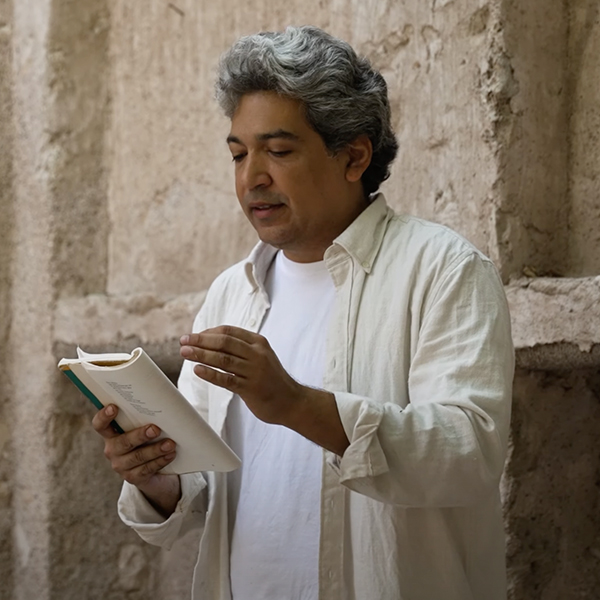
M’barek Bouhchichi at Sharjah Biennial 16
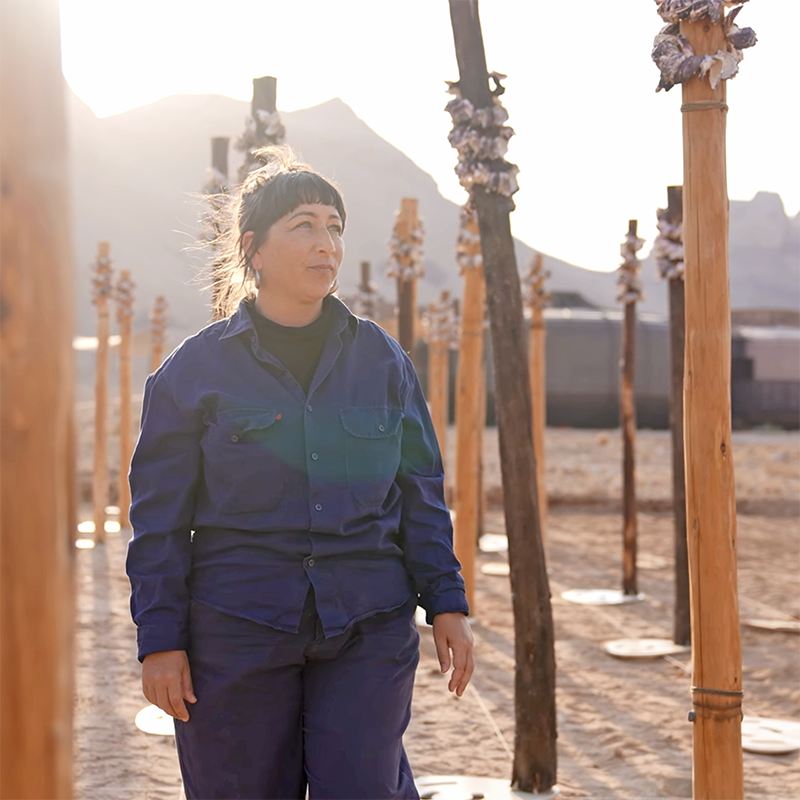
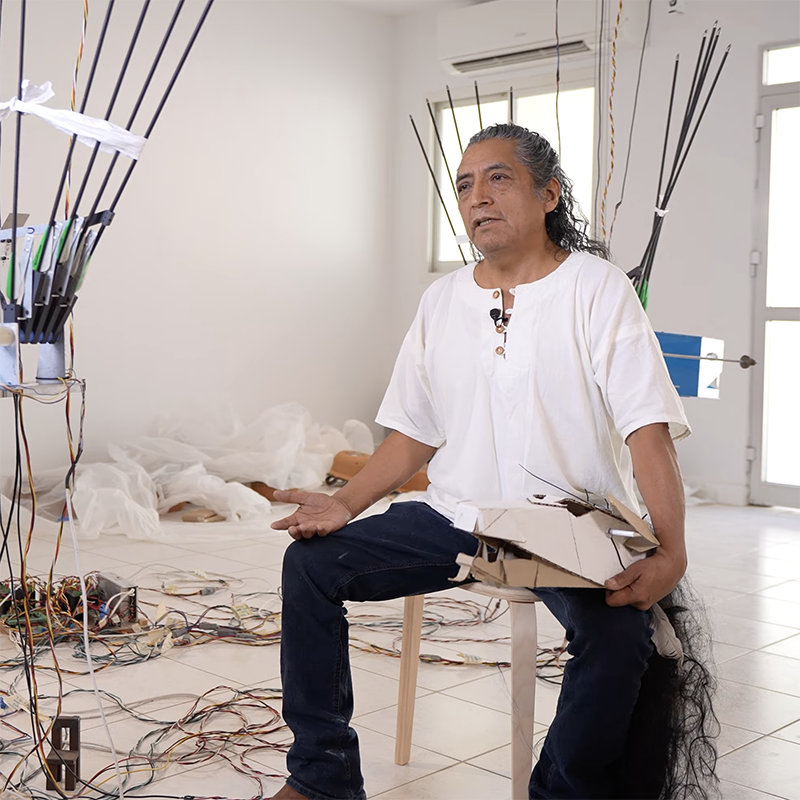
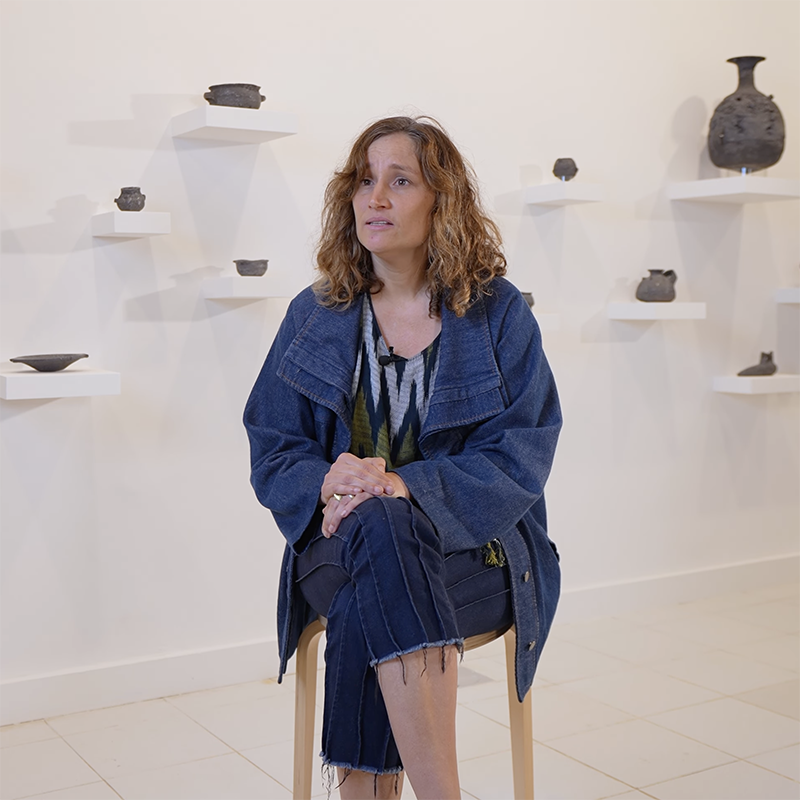
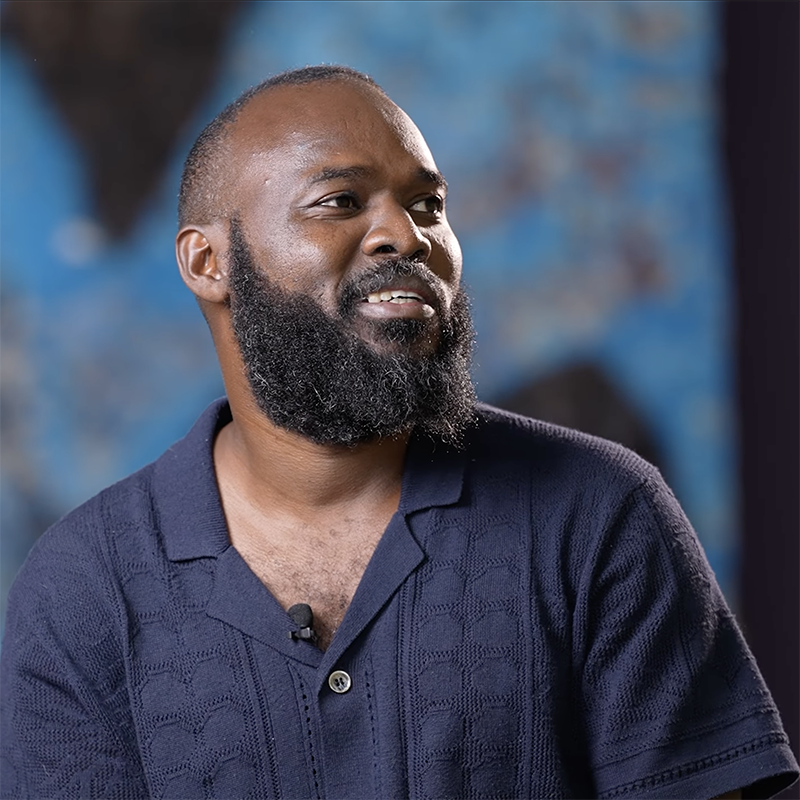
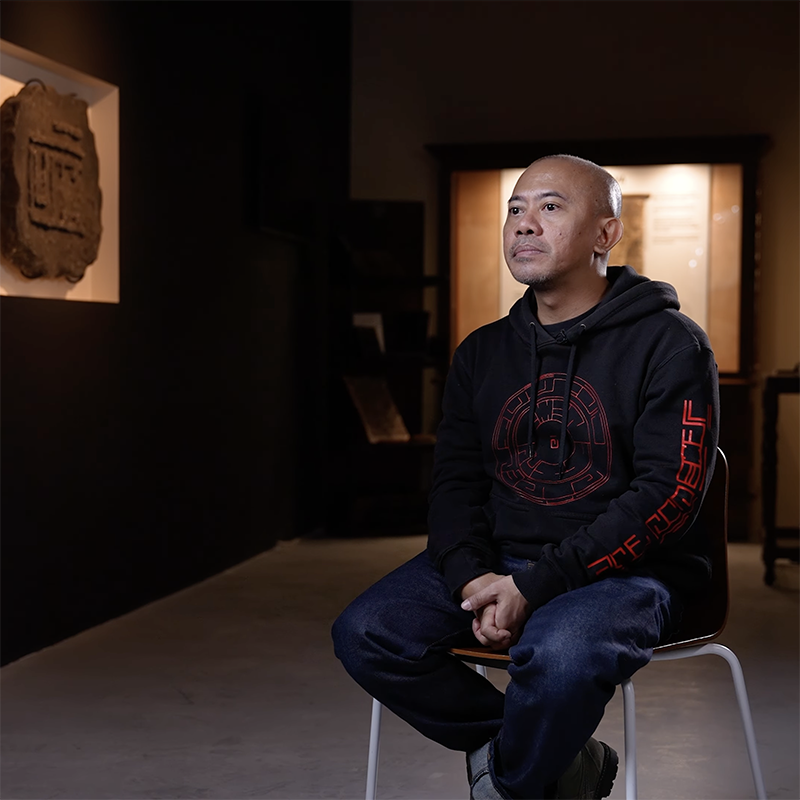
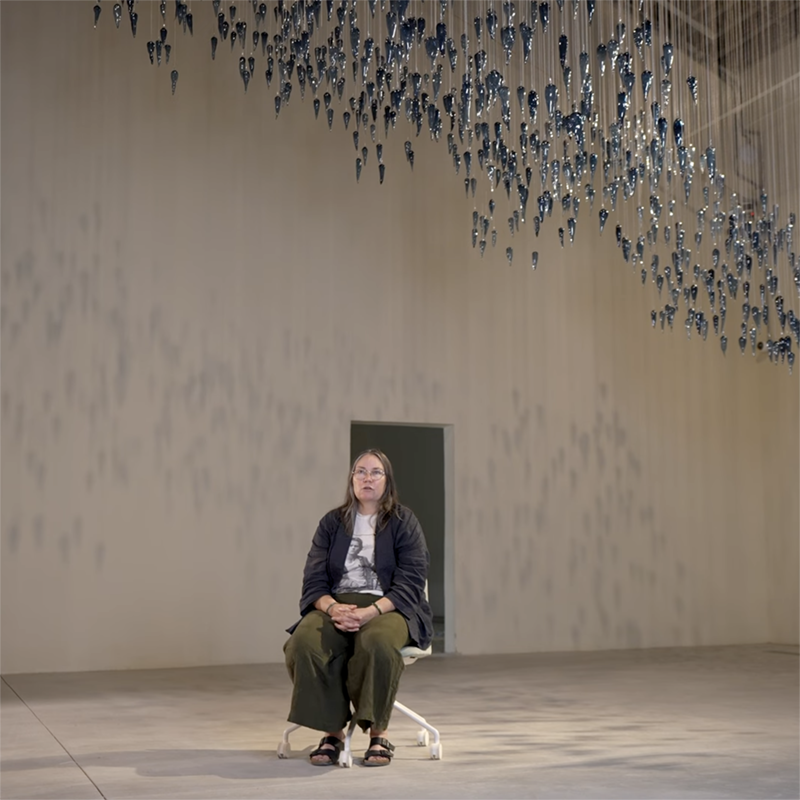
M’barek Bouhchichi focuses on embodied histories and liberatory poetics of Blackness in his homeland, Morocco, and other regions of North Africa. The artist constructs a decolonial archive of intertwined material and literary cultures - Our voices are wounded (2024) assembles 40 vessels recalling ancient pottery used for carrying and storing water. Representing different civilisations and eras, these ceramic works are engraved with poetic fragments in minoritised languages, pressing against colonial monolingualism and the violence of empires. The seven works from ‘"La poésie ne doit pas périr. Car alors, où serait l’espoir du Monde" Léopold Sédar Senghor’ [‘Poetry must not perish. For then, what would be the hope of the world?’ Léopold Sédar Senghor] (2023) are inspired by the writing of the Senegalese poet, thinker and political leader quoted in the title. Bouhchichi transforms the tribulum, an ancient agricultural implement for threshing grains, into a slate for the inscription of revolutionary Tunisian poetry in Braille, invoking the persistence of haptic memory and the power of opacity against the blindness of imperial history. Watch this Artist In Focus to learn about Bouhchichi's work.
Subscribe to Sharjah Art Foundation's Youtube channel for more artist stories, exhibitions, and behind-the-scenes insights.
Director - Magdi Emad
Camera Operators - @ward helal, @shefeek_sha_nk, @alialfadly1
Editor - Magdi Emad
Sound Design - @unnikrishnan.sb
Production Manager - @dimzyb
Assistant Director - @unnikrishnan.sb